
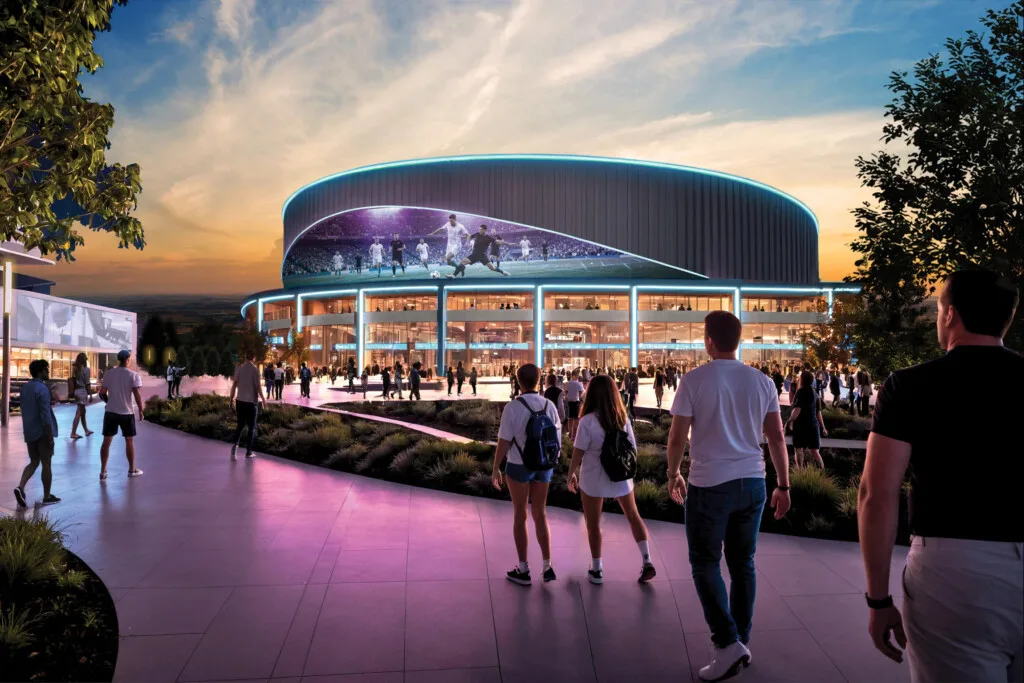
Conceptual rendering of Dova Arena. Final design subject to change. Source: Perkins&Will and KozPure Development.
Rancho Cordova’s council voted 4-1 on October 26 to approve the design of a 7,500-seat arena and the sale of city-owned land for it, the first major step in a project backers call Downtown DOVA. The city’s staff report puts the city’s total financial participation at about $185M over 35 years. That’s an estimate of performance-based incentives, and the council hasn’t voted on it yet. The decision is set for November 2.
For anyone who owns, leases, or invests in commercial property around Highway 50, the terms matter more than the headline. Here is what the council approved, what the city’s own documents say, and what’s still open.
What the Council Approved
Councilmember Joe Little cast the lone no vote, according to the Folsom Times and the Onsite Observer. The Onsite Observer reports the council also voted 4-1 to introduce the development agreement ordinance, and 4-1 that no further environmental review was required.
The staff report describes a roughly 194,110 SF, four-level arena of about 97 feet with about 7,500 fixed seats. The staff report anticipates 180-plus arena events and 40-plus plaza events a year. Later phases may include about 800 hotel rooms, up to 1,000 apartments, about 220,000 SF of retail, restaurant, and office space, and structured parking for up to 2,500 vehicles.
The developer is KozPure Development with its affiliates DOVA Arena LLC and Alpha One Sports and Entertainment Group. The Sacramento Bee reported the arena would be the firm’s first significant project. The Planning Commission voted 7-0 on September 30 to recommend approval, per the staff report.
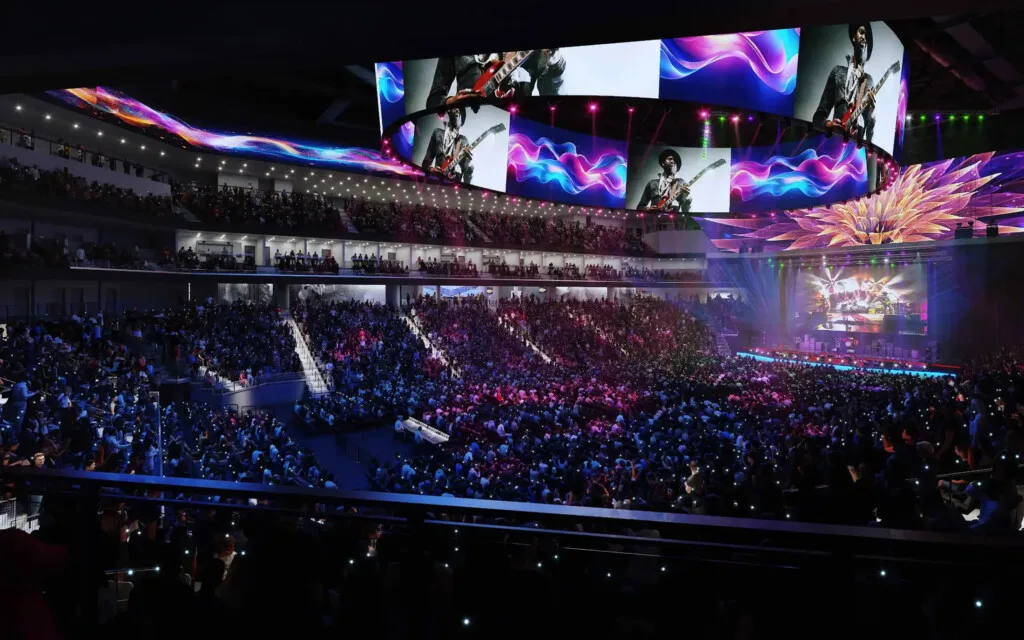
Conceptual rendering of Dova Arena. Final design subject to change. Source: Perkins&Will and KozPure Development.
The Land Sale, Line by Line
The Land Transfer Agreement sets the price for about 12.5 acres at $3,535,000, based on a city appraisal dated May 1, 2026. Under a September 2025 agreement, the council had planned to contribute the land at no cost. The developer is now buying it at what the staff report calls market value.
The sale happens in two closings:
- First closing: about 1 acre for the plaza next to the arena, at $300,000, paid entirely in cash with no city financing.
- Second closing: the remaining 11.5 acres, priced at the updated appraisal’s fair market value minus the $300,000. The buyer pays 20% in cash and signs a city note for 80%.
The city note matures in 10 years, carries interest at the lesser of 6% or the prime rate plus 1%, allows prepayment without penalty, and is secured by a deed of trust. It can be subordinated only to a construction loan for vertical improvements.
The price can drop by up to $600,000 because the city’s soil testing found a stockpile of non-toxic debris and unsuitable material. The buyer takes on the cleanup. At the baseline, simple arithmetic puts the land at about $282,800 per acre, and the note at about $2.59M.
The city isn’t obligated to close unless the developer is in good standing under the financial agreement, and it can terminate before closing if the developer hasn’t signed it. That agreement is what comes back November 2.
The $185M Question
The staff report calls the financial participation performance-based, with city support at three milestones. The pieces:
- Permit fee waivers: up to $3.7M for the arena, hotels, and parking, waived as the fees come due. No funds advanced.
- Impact fees: up to $13.5M, paid by the city on the developer’s behalf from the General Fund after final inspection of each eligible component.
- Public safety support: up to $15M, for up to 15 years. Police support starts only after 75,000 SF of non-arena retail or commercial space is occupied, and fire-related support starts after the 100th housing unit is occupied.
- Tax sharing for 35 years: 50% of the sales tax received from the project, 100% of the hotel tax from the site less a 2.5% city fee, and 100% of cardroom tax from up to 20 tables, less the same fee.
The first three total $32.2M. The staff report doesn’t itemize the rest of the $185M. It calls the site-activation stage, tax sharing plus public safety support, the most significant component, and says the city’s share depends on the project’s performance. The Sacramento Bee’s pre-hearing estimate of $25M to $40M in fee waivers was higher than the $17.2M in waivers and impact fee payments the staff report lists.
Both sides have a case. Councilmember David Sander called claims that the city would be “on the hook for $185 million” completely untrue, per the Onsite Observer. Little said staff told him the deal was likely “a wash.” The staff report itself says the project is financed primarily by private capital and contrasts it with arena deals where the public contributes large sums up front.
What Isn’t Settled
The staff report doesn’t include an arena construction budget or name committed private financing. The Folsom Times estimates phase one at $175M to $225M.
The development agreement is introduced, not adopted. The ordinance sets a 10-year term, extendable to a maximum of 19 years, and requires 15% of the units on the city parcels to be affordable. The second reading is November 2.
The environmental call rests on the 2006 General Plan EIR. The staff report notes that EIR identified significant and unavoidable impacts in categories including transportation and air quality. Staff concluded the project adds none that are peculiar to the site. The Folsom Times reports critics question whether that old analysis covers current traffic. The Sacramento Bee says traffic is residents’ most common concern.
There’s also local history. The Folsom Times reports a 72,000 SF entertainment center proposed for the same site in 2013 was never built. The developer’s tentative target for the first professional indoor soccer games is Q1 2028, per the Folsom Times.
What Downtown DOVA Means for Commercial Real Estate
Entitlement is not construction. Design approval and a land agreement are steps. Financing, final fee terms, and traffic mitigation are open. Anyone pricing nearby land on the assumption the district will be built should treat that as a probability, not a certainty.
The land price isn’t a comp. About $282,800 per acre is a city sale tied to one appraisal, with 80% financed by the seller and cleanup costs shifted to the buyer. Don’t use it to value nearby sites.
The timeline is long. The agreement allows up to 19 years with extensions, and the outside date for the second closing can be the fourth anniversary of the arena’s certificate of occupancy, subject to extension. Consider a hypothetical owner of a retail center a few blocks away. That owner shouldn’t count on arena crowds until the first phase opens.
What This Means
For owners: Owners near Kilgore Road and Trade Center Drive should watch the November 2 votes and the updated appraisal before changing rent or price expectations. Traffic and parking changes will affect access before any new customers arrive.
For buyers: Underwrite on what’s built and approved, not on the renderings. Confirm whether the financial agreement was signed, and what happens to the land sale if it wasn’t.
For tenants: Hospitality, restaurant, and event-related tenants may see opportunities if the project proceeds, but opening is targeted for 2028 at the earliest. Don’t sign long leases at premium rents based on a project that hasn’t started construction.
Greg Diodati, CCIM has been advising commercial real estate investors and owners since 1982. Call (916) 538-3399.
About Greg Diodati, CCIM
Greg Diodati, CCIM is a commercial real estate broker with RE/MAX Gold Commercial, serving Sacramento Metro. Since 1982, he has advised commercial property owners, investors, landlords, tenants, buyers, and business owners, with particular focus on commercial investment real estate and industrial properties.
STAY IN THE LOOP



[…] report the final agreement doesn’t actually cap it there. Here is what changed since the October 26 vote, and what’s still […]